Delving into the realm of hybrid cloud solutions, this article aims to shed light on the innovative approach businesses are taking towards cloud computing. As organizations strive for flexibility and efficiency in their IT infrastructure, hybrid cloud solutions emerge as a compelling option that combines the best of both worlds - on-premises and public cloud services.
Let's unravel the intricacies of this dynamic technology and explore its myriad advantages.
Overview of Hybrid Cloud Solutions
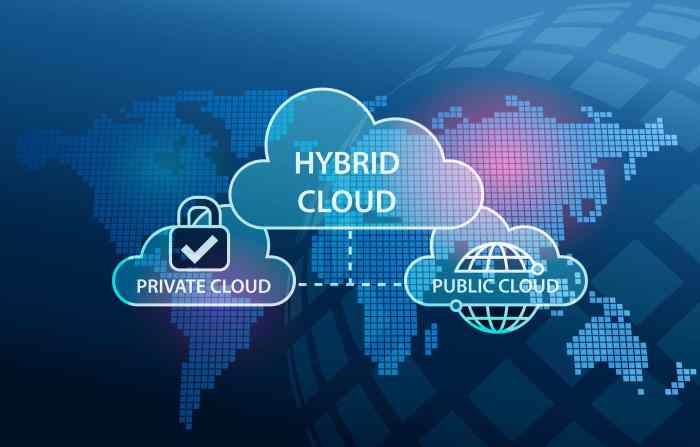
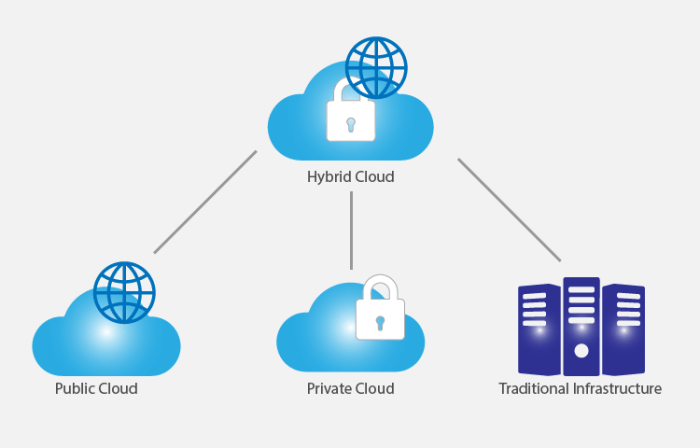
Hybrid cloud solutions combine the use of both public and private cloud services to create a flexible and scalable IT infrastructure. This allows organizations to leverage the benefits of both types of cloud environments based on their specific needs and requirements.
Examples of Businesses Benefiting from Hybrid Cloud Solutions
- Large enterprises with sensitive data that require private cloud security measures while also needing the scalability and cost-effectiveness of public cloud services.
- E-commerce companies that experience fluctuating demand and need the flexibility to scale their resources up or down quickly.
- Healthcare organizations that need to comply with strict data privacy regulations but also want to take advantage of cloud-based collaboration tools for improved patient care.
Advantages of Using Hybrid Cloud Solutions
- Increased flexibility: Organizations can customize their cloud environment to meet specific workload requirements, ensuring optimal performance and cost-efficiency.
- Enhanced security: Utilizing a private cloud for sensitive data while leveraging the advanced security features of public cloud providers helps organizations maintain data protection and compliance.
- Scalability: Hybrid cloud solutions allow for seamless scaling of resources, enabling organizations to adapt to changing business needs without overprovisioning or underutilizing resources.
- Cost-effectiveness: By optimizing resource allocation and leveraging pay-as-you-go pricing models, businesses can reduce operational costs and maximize the value of their cloud investment.
Implementation of Hybrid Cloud Solutions
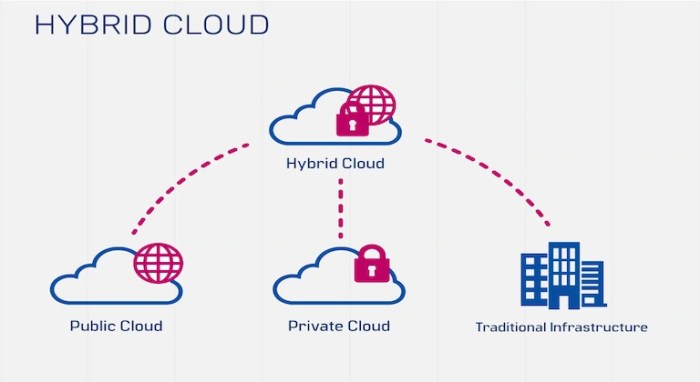
Implementing hybrid cloud solutions involves several steps to ensure a seamless integration of on-premises infrastructure with public cloud services. Below are the key steps involved in implementing hybrid cloud solutions:
Different Hybrid Cloud Deployment Models
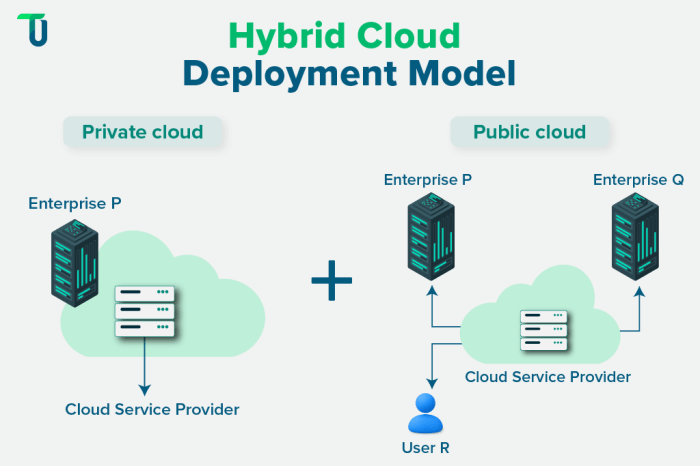
When considering hybrid cloud deployment models, organizations can choose between various options based on their specific requirements and preferences. Some common hybrid cloud deployment models include:
- Public-Private Hybrid: This model involves the use of both public and private cloud services, allowing organizations to leverage the benefits of both environments.
- Distributed Hybrid: In this model, data and applications are distributed across multiple public and private cloud environments, providing redundancy and flexibility.
Best Practices for Integrating On-Premises Infrastructure with Public Cloud Services
To ensure a successful integration of on-premises infrastructure with public cloud services in a hybrid model, organizations should follow these best practices:
- Assess Workloads: Identify workloads that are best suited for public cloud deployment and those that need to remain on-premises.
- Security Measures: Implement robust security measures to protect data and applications moving between on-premises and public cloud environments.
- Network Connectivity: Establish reliable network connectivity between on-premises infrastructure and public cloud services to ensure seamless data transfer.
- Data Management: Develop a comprehensive data management strategy to govern data across both on-premises and cloud environments effectively.
- Monitoring and Optimization: Continuously monitor and optimize the hybrid cloud environment to ensure performance and cost efficiency.
Security Considerations in Hybrid Cloud Solutions
In a hybrid cloud environment, ensuring data security is crucial to protect sensitive information and maintain regulatory compliance. Let's explore some common security challenges and strategies to enhance security in hybrid cloud solutions.
Common Security Challenges
- Lack of visibility: Managing security across multiple cloud platforms can lead to a lack of visibility into potential threats and vulnerabilities.
- Data breaches: The complexity of hybrid cloud environments can increase the risk of data breaches if proper security measures are not in place.
- Compliance issues: Meeting regulatory requirements and industry standards can be challenging in a hybrid cloud setup.
Strategies for Data Security and Compliance
- Encryption: Implementing strong encryption methods for data at rest and in transit can help protect sensitive information from unauthorized access.
- Access controls: Utilizing role-based access controls and multi-factor authentication can ensure that only authorized users have access to critical data and resources.
- Monitoring: Continuous monitoring of network traffic, system logs, and user activities can help detect and respond to security incidents in a timely manner.
Role of Encryption, Access Controls, and Monitoring
Encryption plays a key role in securing data in hybrid cloud solutions by encoding information to make it unreadable without the proper decryption key. Access controls help prevent unauthorized access by defining who can access specific resources and what actions they can perform.
Monitoring enables organizations to track and analyze security events, detect anomalies, and respond to incidents effectively.
Cost Management and Optimization in Hybrid Cloud Solutions
Cost management is a crucial aspect of hybrid cloud solutions, as organizations need to balance the benefits of cloud services with their associated expenses. Optimizing costs in a hybrid cloud environment requires a strategic approach to resource allocation and utilization.
Cost Factors Associated with Hybrid Cloud Solutions
- Initial Setup Costs: These include expenses related to setting up the hybrid cloud infrastructure, integrating on-premises systems with cloud services, and configuring network connectivity.
- Operational Expenses: Ongoing costs such as data transfer fees, storage costs, and usage-based charges can impact the overall budget of a hybrid cloud deployment.
- Licensing Fees: Organizations may need to pay licensing fees for software applications or services used in the hybrid cloud environment.
Tips for Optimizing Costs in a Hybrid Cloud Environment
- Right-sizing Resources: Ensure that resources are allocated according to actual usage requirements to avoid over-provisioning and unnecessary expenses.
- Automated Resource Management: Implement automation tools to monitor resource usage, scale resources up or down based on demand, and optimize costs.
- Utilize Cost-effective Services: Choose cloud services and providers that offer cost-effective pricing models and discounts for long-term commitments.
Tools and Strategies for Monitoring and Managing Expenses in a Hybrid Cloud Setup
- Cloud Cost Management Tools: Utilize tools like AWS Cost Explorer, Azure Cost Management, or Google Cloud Billing to track expenses, analyze cost trends, and identify cost-saving opportunities.
- Budgeting and Forecasting: Develop budgets and forecasts for hybrid cloud expenditures to better manage costs and allocate resources effectively.
- Cost Optimization Best Practices: Implement cost optimization best practices such as rightsizing instances, using reserved instances, and leveraging spot instances to reduce costs.
Conclusive Thoughts
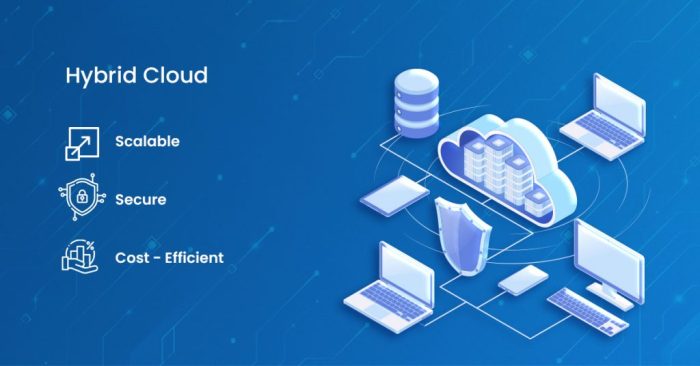
In conclusion, hybrid cloud solutions offer a versatile and scalable approach to meeting the evolving needs of modern businesses. By seamlessly integrating on-premises systems with cloud services, organizations can optimize their operations, enhance security, and streamline costs. Embracing hybrid cloud solutions is not just a trend but a strategic move towards a more agile and resilient IT ecosystem.
Essential Questionnaire
What are the key benefits of hybrid cloud solutions?
Hybrid cloud solutions offer the flexibility to scale resources as needed, enhance data security by combining private and public cloud environments, and optimize costs by balancing workloads effectively.
How can businesses effectively implement hybrid cloud solutions?
Businesses can start by assessing their current IT infrastructure, defining their hybrid cloud strategy, selecting the right deployment model, and ensuring seamless integration between on-premises and cloud systems.
What security measures are crucial in a hybrid cloud environment?
Implementing encryption protocols, robust access controls, continuous monitoring, and compliance frameworks are essential for maintaining data security and regulatory adherence in a hybrid cloud setup.
How can organizations optimize costs in a hybrid cloud environment?
Organizations can optimize costs by leveraging automation tools, monitoring resource usage, adopting pay-per-use models, and continuously evaluating their cloud expenditure to eliminate inefficiencies.